
Those small, rough bumps on the backs of your arms or outer thighs that resist every moisturiser you try have a name: keratosis pilaris. It is one of the most common dermatological conditions worldwide, affecting an estimated 50 to 80 percent of adolescents and up to 40 percent of adults. Yet it remains widely misunderstood, frequently mismanaged, and stubborn enough that many people simply give up trying to treat it.
Understanding what keratosis pilaris actually is, and more importantly what it is not, is the starting point for any approach that is going to produce real results.
What is keratosis pilaris?
Keratosis pilaris is a common, benign skin condition caused by the abnormal retention of keratin inside hair follicles. Keratin is the structural protein that forms the outer layer of your skin. In keratosis pilaris, excess keratin forms a plug that blocks the follicle opening, creating the characteristic rough, raised papule on the skin surface. This process is more precisely described as follicular hyperkeratosis.
The papules are typically small, flesh-coloured or slightly reddish, and distributed in clusters on the outer upper arms, thighs, buttocks, and occasionally the cheeks. The surrounding skin often feels rough and dry, like fine sandpaper. The condition is not contagious, not caused by poor hygiene, and not dangerous. It is, however, a chronic condition that does not resolve on its own, tends to improve in summer and worsen in winter, and requires consistent management rather than a one-time fix.
Keratosis pilaris has a strong genetic basis. It is inherited in an autosomal dominant pattern with variable penetrance, meaning a family history is present in a significant proportion of cases. It is more common in people with ichthyosis vulgaris and atopic dermatitis, both of which involve loss-of-function mutations in the filaggrin gene, a protein central to normal skin barrier function and keratin processing. Hormonal fluctuations during puberty and pregnancy can trigger or worsen the condition, which accounts for its high prevalence in adolescents.
Why is keratosis pilaris often mistaken for dry skin?
The confusion is understandable. Keratosis pilaris and dry skin share surface features: both produce rough texture and both worsen in dry or cold conditions. However, the underlying mechanisms are entirely different, and treating keratosis pilaris as if it were simple dryness produces disappointing results.
Dry skin is a barrier dysfunction problem. The skin lacks sufficient lipids to retain moisture, causing surface dehydration and flaking. Applying a rich emollient directly addresses this by supplementing the barrier.
Keratosis pilaris is a follicular keratinisation disorder. The papules are formed by compacted keratin protein inside the follicle, not by surface dehydration. Adding moisture to the surface does not dissolve or dislodge those plugs. This is why people with keratosis pilaris often report using thick creams diligently with minimal improvement: the moisturiser addresses surface dryness without reaching the root cause, which is the follicular keratin impaction.
Effective management requires a combination approach that addresses both the keratin build-up inside the follicle and the barrier disruption that worsens it, using ingredients with documented keratolytic activity delivered in a format that reaches the follicular environment.
Which ingredients have clinical evidence for keratosis pilaris?
Not all skincare ingredients are equally effective for keratosis pilaris. The ones with the strongest evidence base are keratolytic acids, which dissolve keratin bonds and promote normal desquamation, alongside emollients that support the skin barrier.
Lactic acid is an alpha-hydroxy acid (AHA) with some of the strongest clinical evidence for keratosis pilaris. A published comparative study found that 10 percent lactic acid produced a 66 percent reduction in KP papules over 12 weeks. A survey of board-certified dermatologists found lactic acid is the most commonly prescribed first-line topical treatment for keratosis pilaris. It functions as both a keratolytic, loosening the bonds between keratin cells, and a humectant, drawing moisture into the stratum corneum. At concentrations of 5 to 10 percent it is well-tolerated for daily use on body skin.
Salicylic acid is a beta-hydroxy acid (BHA) with a key structural advantage for follicular conditions: it is oil-soluble. Unlike AHAs, which act primarily on the skin surface, salicylic acid can traverse the sebum-rich follicular canal to reach the site of keratin impaction directly. This makes it a clinically relevant ingredient for keratosis pilaris alongside lactic acid, and it is the second most commonly used topical treatment among dermatologists for this condition. Plant-derived salicylic acid, such as that extracted from Wintergreen Leaf, delivers the same mechanism without the potential irritation associated with high-concentration synthetic preparations.
Squalane (derived from olives; not to be confused with squalene) is a lightweight, non-comedogenic emollient that closely mimics the skin’s own sebum composition. It strengthens the lipid barrier, reduces transepidermal water loss, and maintains the moisture balance of the follicular environment, since excess dryness worsens keratin compaction. Its molecular weight allows it to absorb readily without leaving a film that could further congest affected follicles.
Does physical exfoliation help keratosis pilaris?
Physical exfoliation alone, meaning scrubs, loofahs, or exfoliating mitts, is insufficient to treat keratosis pilaris and can worsen it. Aggressive mechanical scrubbing causes micro-trauma to the perifollicular skin, triggering inflammation that intensifies the redness and roughness characteristic of the condition.
The evidence-supported approach is chemical exfoliation using keratolytic acids applied consistently as part of a daily routine. Consistency matters because the follicles will re-plug if the keratolytic is discontinued: the underlying genetic tendency to abnormal keratin retention remains. Keratosis pilaris management is ongoing rather than a course of treatment with a defined end point.
Gentle physical exfoliation, such as a soft-bristle body brush used two to three times per week, can support chemical exfoliation by clearing surface debris, but should always be secondary and never used as a substitute for acid-based keratolysis.
Does application timing matter for keratosis pilaris treatment?
Application timing is an underappreciated variable in topical skincare efficacy. The established dermatological principle known as soak-and-smear involves applying topical agents to skin that is still damp, and is documented in the literature for improving absorption and clinical outcomes in barrier-related skin conditions. The rationale is that hydrated skin has greater permeability and emollients applied to wet skin are more effectively occluded against the surface, reducing transepidermal water loss more efficiently than application to already-dry skin.
For keratosis pilaris specifically, this timing advantage is relevant. The goal is to deliver barrier-repairing lipids and keratolytic acids as close to the follicular environment as possible, and the permeability window is widest when the skin is still hydrated from bathing.
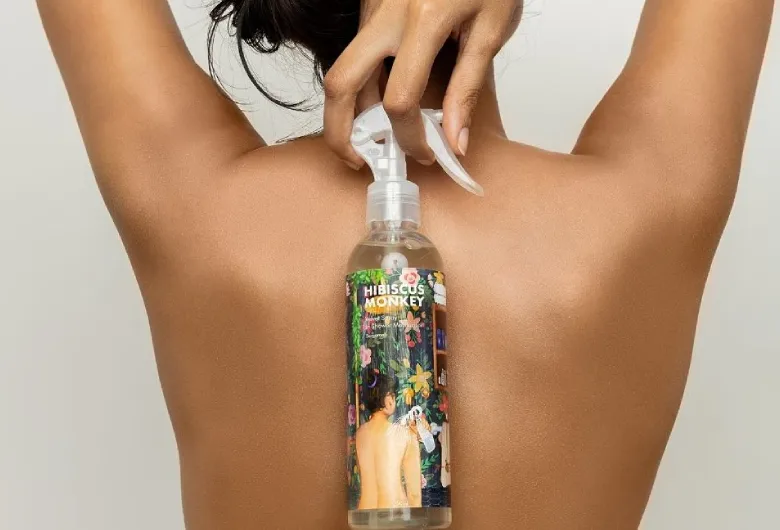
Velvet Spray Squalane In-Shower Moisturiser by Hibiscus Monkey is designed around this principle. It is applied directly to wet skin while still in the shower, before drying, combining olive-derived squalane with plant-derived salicylic acid from Wintergreen Leaf. The squalane supports the lipid barrier and reduces transepidermal water loss, while the salicylic acid targets follicular keratin build-up at the point of highest skin permeability. The formulation is sulphate-free, fragrance-free, and EWG-compliant, making it appropriate for sensitive skin and daily use.
The in-shower format also means the product does not remain as a film on the skin surface in the way a leave-on cream does, which is relevant for people who find that heavier occlusive emollients aggravate congestion on KP-affected areas.
Why does keratosis pilaris worsen in winter?
Low humidity and cold temperatures reduce the skin’s natural moisture content and impair barrier function, increasing transepidermal water loss. As the follicular environment becomes drier, keratin compaction becomes more pronounced: the hardened sebum and keratin within the follicle plug more readily when the surrounding tissue is dehydrated.
Indoor heating compounds this by reducing ambient humidity further. People who experience near-complete improvement in summer, only to see KP return significantly in winter, are experiencing this mechanism directly. The genetic predisposition remains constant; the environmental conditions modulate how actively the follicular hyperkeratosis expresses itself.
This seasonal pattern reinforces why the most effective management combines consistent keratolytic exfoliation with consistent barrier support throughout the year, rather than reactive treatment during flares only.
Frequently asked questions
Is keratosis pilaris permanent?
Keratosis pilaris is a lifelong genetic condition, but it is highly manageable. Many people find it improves substantially in adulthood and in warmer months. With consistent use of clinically supported ingredients, bump texture and roughness can reduce markedly, though they typically reassert themselves if the routine is discontinued, since the underlying follicular keratinisation tendency remains.
Can diet affect keratosis pilaris?
There is limited direct clinical evidence linking specific foods to keratosis pilaris. The condition is primarily genetic in origin. However, chronic systemic inflammation, including that associated with certain food sensitivities, can worsen the perifollicular erythema. A diet supporting overall skin barrier health, including adequate omega-3 fatty acids, may be helpful as a supportive measure, but is not a substitute for topical keratolytic treatment.
What is the difference between keratosis pilaris and strawberry skin?
“Strawberry skin” and “chicken skin” are colloquial terms that often refer to the same condition: keratosis pilaris. “Strawberry skin” more specifically describes the visually dotted appearance that results when follicular plugs create a contrasting shadow effect against the surrounding skin, or when post-inflammatory hyperpigmentation develops around follicle sites following prolonged or inflamed KP. The underlying condition and treatment approach are the same.
Does keratosis pilaris cause scarring?
Keratosis pilaris itself does not cause permanent scarring. However, mechanical manipulation, such as picking or squeezing the papules, can cause micro-trauma that leads to post-inflammatory hyperpigmentation, appearing as persistent dark marks at the follicle site. Consistent topical management with keratolytic acids is significantly preferable to mechanical intervention for this reason.
Is salicylic acid safe for daily use on keratosis pilaris?
At low to moderate concentrations, salicylic acid is generally well-tolerated for daily use on body skin. Plant-derived forms, such as from Wintergreen Leaf Extract, tend to be gentler than high-concentration synthetic preparations. As with any exfoliating acid, gradual introduction is advisable, and sun protection on treated areas is recommended, as keratolytic acids increase photosensitivity with UV exposure.
Managing keratosis pilaris effectively
Keratosis pilaris responds best to a consistent routine that addresses both the follicular keratin build-up and the barrier dryness that intensifies it. Clinically supported keratolytic acids, specifically lactic acid and salicylic acid, combined with squalane-based barrier support and applied at the point of maximum skin permeability, produce more meaningful and sustained results than moisturiser alone.
Improvement is cumulative. Published clinical studies show measurable reductions in KP papules within eight to twelve weeks of consistent treatment. Since the condition is driven by a genetic predisposition to follicular hyperkeratosis, management is ongoing rather than curative, which makes choosing formulations that are genuinely tolerable for daily long-term use an important practical consideration.
